Mulki came to me as a suggestion from a marriage prospect.
When I expressed my interest in surfing, he told me about this small coastal town near Mangaluru. The prospect did not work out, but the destination stayed with me. So, by the end of 2023, I planned a solo surfing trip to Mulki over Christmas.
I packed my bag with equal parts apprehension and excitement, along with high-SPF sunscreen and a UV-protection surfing T-shirt. Priorities, you see.
I landed on a beach that seemed particularly reserved for surfing. The sound that echoed through the morning air was “Paddle… paddle… paddle… There comes the wave. Pop-up..balance!”
I had literally arrived to do just that. But life seldom runs on plans.
For the next five days, this became our ritual. The surfboard was the obvious companion, and the people who had travelled there from across the country became human books. Everyone belonged to a different walk of life and carried a different lens towards it. A nineteen-year old boy came for his first solo; a girl took a break from her aeronautics course to volunteer at the surf school; another girl stayed there for 67 days because she had privillege of remote work; a man kept returning as though surfing were his religion; and a group of friends, on an overnight trip, had randomly decided to come and surf.
The time anyone could have used to rest became the hour of amusement — stories were shared, UNO cards were reversed amid loud laughter, all while we relished chicken ghee roast, kori gassi, and many more local cuisines. That is the thing about hostels: social life comes served as a side dish.
The best organisations to work for, investment ideas, the curious differences between millennials, Gen Z and boomers, numerology, oh — the tricks to surfing better, local legends, a treasured recipe: most of these conversations happened between people who had never exchanged introductions. Interestingly, I met a tarot reader who predicted that I would marry a man who had been married before, and that we would live happily ever after. Well, the waves were not the only unpredictable things in Mulki!
While this trip gifted me new perspectives, it also presented moments of nostalgia. The surf school teleported me to a phase of boarding school.
Every morning, we woke up to the sound of a whistle. Sometimes it was at seven; on others, a little earlier. The timing depended on the tide, and the tide on the previous night’s moon. Unlike in the cities, the moon decided our schedule in Mulki. And there was no room to snooze.
I find it fascinating that an astronomical body hanging almost 384,000 kilometres away—just over a light-second from us—could decide what time we woke up and walked towards the sea.
With the energy of ten-year-olds, everyone would rush to the washrooms, change into surfing clothes, layer on sunscreen and have fruits as part of the discipline. Then, some twenty-five-odd adults would walk, voluntarily, through the village towards the backwaters, bound by a common interest in surfing.
Imagine an early morning in a coastal town: narrow village roads, coconut trees on either side, and a sizeable crowd walking together towards a boat. The boat would take us across the backwaters to the beach, where the waves were already waiting. It remains one of the most rustic and yet premium experiences of my life.
Before entering the water, we were taught about waves, balance and posture. “Bend your knees. Look ahead. Do not stand too quickly. And, most importantly, keep paddling.” All the instructions remain valid until a wave strikes. It has a personality of its own. It humbled each of us, funnily so.
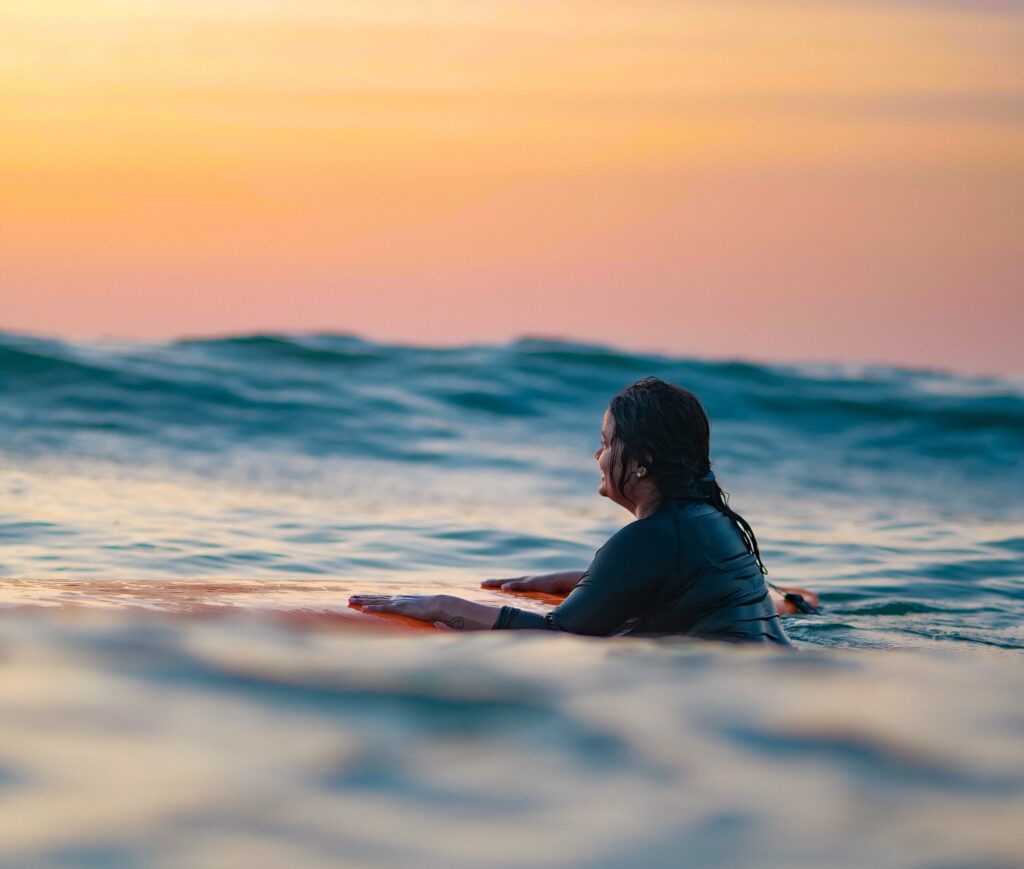
Sometimes I managed to stand. Other times I fell before I could even understand what had happened. Sea, actually, became our classroom, playground, and teacher. Safe to say, it is a package. Days later, when sand disappeared from bags, tans lingered like souvenirs on the skin.
Culture of Tulu Nadu: Local legends and age-old Practices Shaped by Faith
They say a place is only as good as its people. Mulki is deep-rooted in culture, and its people are ecstatic to share the land and ocean with their guests. For me, it simply offered warmth and familiarity of the new place.
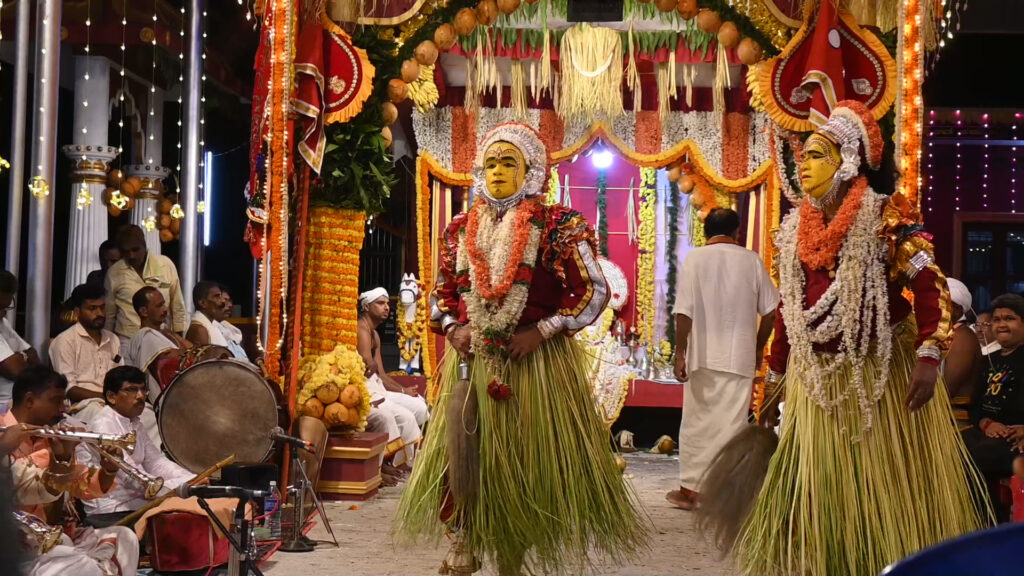
If you have watched the National Award-winning film Kantara, you may already have had a glimpse of the culture of Tulu Nadu. But watching Kambala and Bhootha Kola through the night is an indescribable theatrical experience— dramatic, immersive, and completely driven by faith. Some traditions cannot be understood through a screen. You need to stand there, listen to the sounds, watch the faces around you and allow the night to unfold its own story.
The temples there hold the ancient tales with grace. Seeing them through the eyes of a native-Mangalorean was a treat in itself.
Long after I left the land of Tulu Nadu, its flavours and culture continue to find their way into my conversations. As recently as December 2025, while I was in Srinagar, a Mexican filmmaker asked me about the best beaches in India. My mind immediately travelled back to the coast of Karnatka. I suggested Padubidri, a Blue Flag beach, and Maravanthe, where the highway runs between the Arabian Sea and the Souparnika River.
It was strange and beautiful—standing in Kashmir and talking about the beaches of Karnataka with someone from Mexico. Travel does that. It turns places into stories, and stories into little bridges between people who might otherwise have nothing in common.
Maybe that is why I keep travelling. To discover that I can wake up without snoozing, fall into the sea without panicking, sit with strangers without feeling lost and trust a board to carry me through a wave.
Not every journey changes our lives dramatically. Some simply give us a new story for the dinner table. Some introduce us to people we will remember through photographs and social media. And some teach us that losing our balance is not always a failure. Sometimes, it is simply part of learning how to find our stance.
You see, not all marriage prospects come into your life to date or marry you. Some just come to tell you about a new travel destination.
The best time to visit Mulki for surfing is between October and April. December and January, however, are when the surrounding towns are at their most colourful, with cultural exhibitions.